

Why search in Greek e-shops needs something more
Greeklish, accents, phonetic brand spellings and natural-language phrases: what makes Greek search hard and how we solve it.
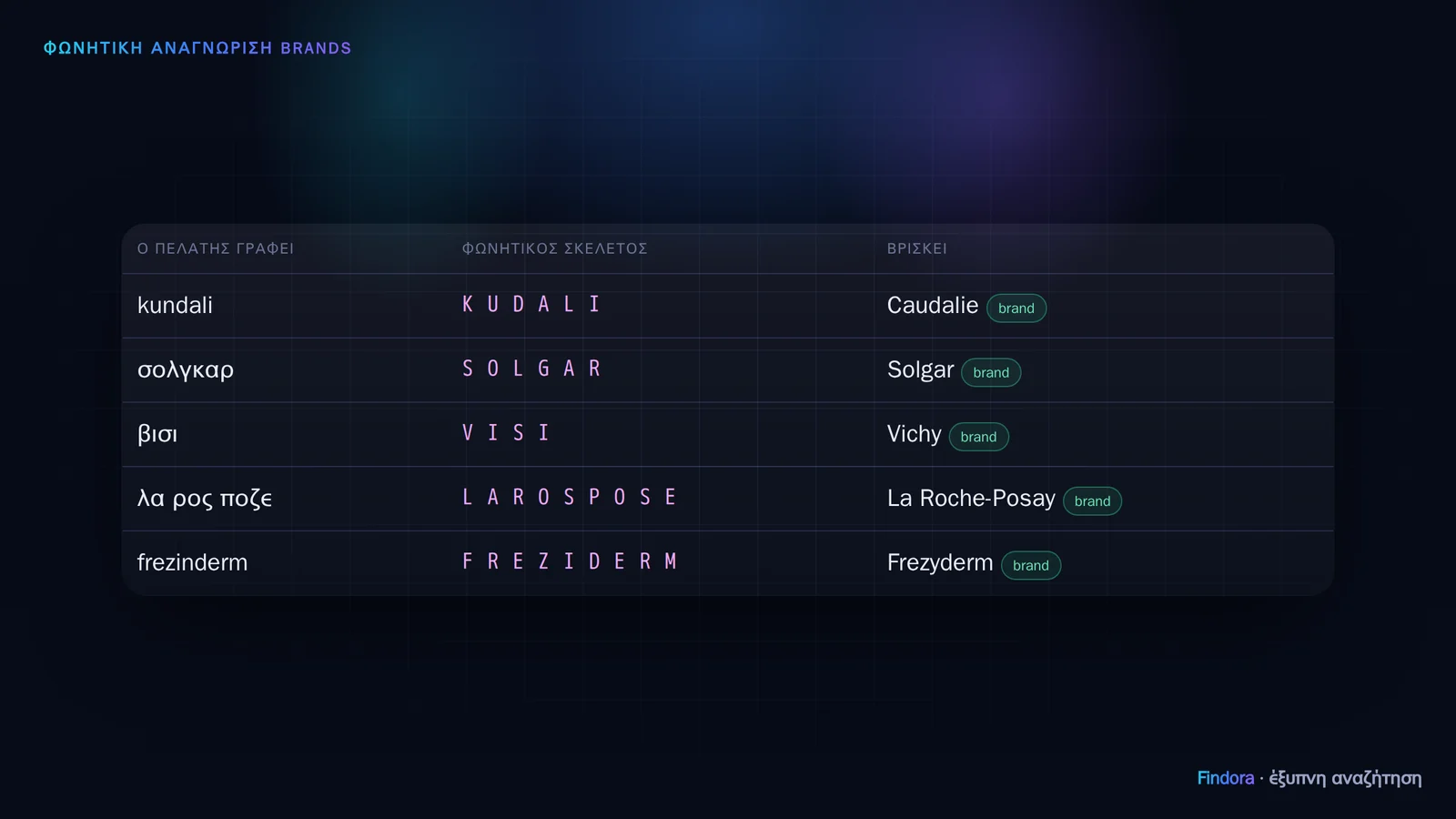
When a customer looks for sunscreen, they don't always type “αντηλιακό” (sunscreen). They type “antiliako” in greeklish (Greek written in Latin characters), “αντηλιακο παιδικο” (kids' sunscreen) without accents, or simply “spf 50”. If they are looking for La Roche-Posay, they might type “λα ρος ποζε”.
Most search engines were built for English. In Greek e-shops this means zero-result searches, in other words customers who leave.
What Findora does differently
- Greeklish ↔ Greek: “antiliako” finds “αντηλιακό”, “sampouan” finds “σαμπουάν” (shampoo).
- Phonetic skeleton: “kundali” finds Caudalie, “σολγκαρ” finds Solgar.
- Natural language: “σαμπουάν κάτω από 10€” (shampoo under €10) becomes a category and a price range.
- Codes: EANs, shop product codes and “d3 2000” find the right product first time.
We measure, we don't assume
Before choosing an engine for Findora Cloud, we tested three leading engines with a real pharmacy catalogue (4,756 products) and 6 months of real searches. Without Greek “intelligence”, none of them got past 14 of the 22 hard queries. With Findora's layer, the chosen engine reached 21/22, responding in about 2 milliseconds.
Want to see how it would work in your own shop? Request a demo.